
Our bathroom used to be the one room I avoided looking at too closely. After a shower, the mirror would fog up, the sink ledge would collect water spots, towels would stay slightly damp for days, and the little shelf above the toilet would slowly grow black mould spots in the corners. In our small rented flat, with poor ventilation and the constant humidity of Punjab, the bathroom never seemed to stay clean for long — no matter how often I wiped it.
After years of fighting this cycle, I realised the problem wasn’t that I was lazy about cleaning. It was that I was fighting the wrong battle. Instead of trying to store more things or scrub harder, I started focusing on keeping moisture from building up in the first place and organising only the essentials in smart ways. The change was surprisingly simple, and the bathroom finally started feeling fresh and usable instead of constantly damp and cluttered.
Here’s what actually worked for us.
Accepting the Reality of Humid Bathrooms
In many small Pakistani bathrooms — especially in rented flats or older homes — the space is built for basic function, not storage or ventilation. Hot showers create lingering steam, water splashes onto every surface, and poor airflow means things dry slowly. Towels, loofahs, and even plastic bottles trap moisture, leading to that unpleasant musty smell and black mould spots on grout or shelves.
When items stay damp, they not only look messy but can also harbour bacteria and shorten the life of your toiletries. Organising in these conditions requires thinking differently — focusing on airflow, quick drying, and separating wet from dry items instead of just neat stacking.
The Most Effective Change: Separate Wet and Dry Zones
One of the biggest improvements came when I divided the bathroom into wet and dry zones.
The wet zone (inside or right next to the shower) is only for things that get wet every day: shampoo, body wash, and loofah. I use a hanging mesh caddy that allows water to drain straight away and air to flow around the bottles.
The dry zone (away from the shower splash area) is for toothpaste, face wash, combs, cotton buds, and medicines. These live on a higher shelf or in a small cabinet, well away from water splashes.
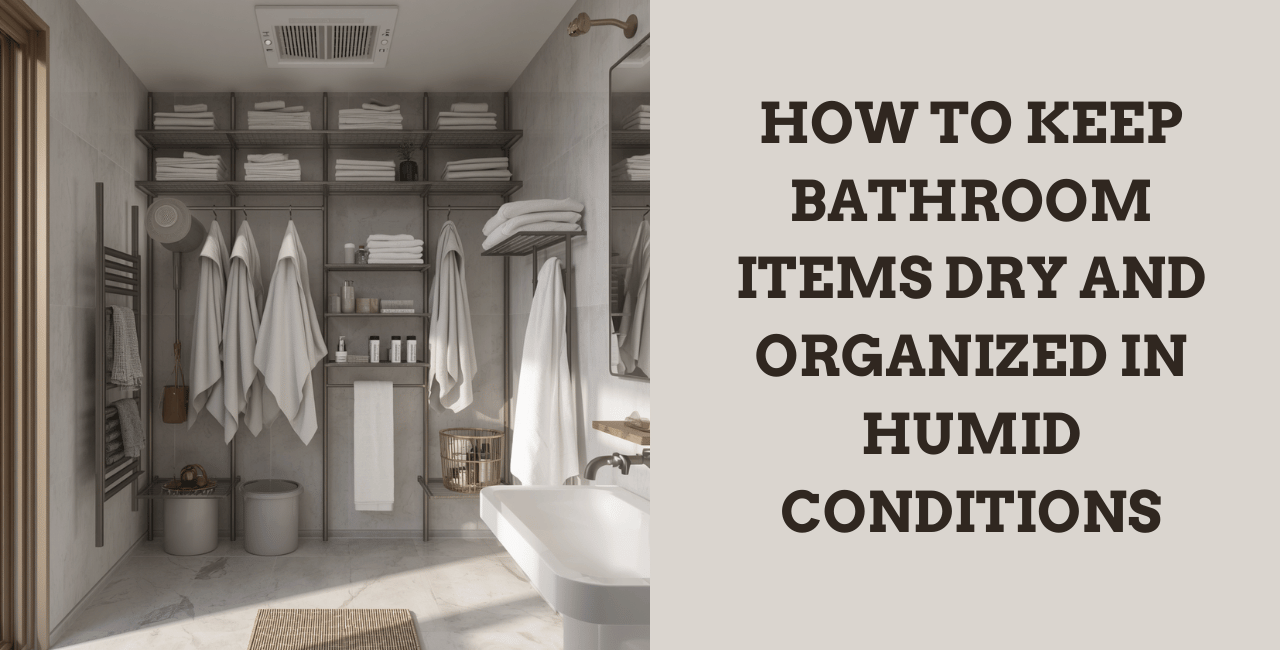
Towels and bathrobes hang on separate hooks with enough space between them for air to circulate. This separation stops dry items from getting damp and keeps wet items from creating puddles on shelves. In many small bathrooms, even moving the towel hook just 30–40 cm away from the shower makes a noticeable difference.
Choosing Materials That Actually Dry in Humid Conditions
In humid climates, material choice matters more than looks.
Mesh or plastic caddies that hang over the showerhead or on the wall allow water to drain and air to flow.
Stainless steel or plastic shelves with drainage holes work better than solid wooden or painted shelves, which can warp or develop mould.
Adhesive or suction-cup hooks are perfect for rented homes — they hold towels and loofahs without drilling.
Clear plastic bins with lids for extra stock (shampoo refills, extra soap) should be stored outside the bathroom if possible, or on higher, drier shelves inside the bathroom.
Avoid fabric baskets or cardboard in the bathroom — they absorb moisture and quickly become breeding grounds for mould. If you must use fabric, choose quick-drying mesh versions and wash them regularly.
For medicines and small dry items, a small wall-mounted cabinet or a raised plastic tray keeps them safe from splashes.
Daily Habits That Prevent Moisture Buildup
Organisation alone isn’t enough — daily habits keep humidity in check.
After every shower, I run a small squeegee or old cloth over the walls and floor to remove standing water. I wipe the sink and taps dry instead of leaving them wet. Towels go on the hook immediately so they air-dry properly rather than stay damp on the floor.
At the end of the day, I do a quick 2-minute reset: wipe surfaces, check for puddles, and make sure nothing is sitting in water. I open the bathroom door or window for 10–15 minutes after showers to let steam escape, especially in windowless bathrooms.
These micro-habits take almost no extra time but stop small moisture problems from turning into big mould issues.
Weekly Maintenance and Long-Term Solutions
Once a week, I give the bathroom a more thorough check:
- Wash or replace loofahs and sponges (they harbour bacteria when wet).
- Wipe shelves and hooks with a mild vinegar-water solution to prevent mould.
- Check inside cabinets and under the sink for hidden dampness.
- Air out towels and bath mats in sunlight if possible.
For long-term improvement, consider simple ventilation upgrades that don’t break the bank — a small exhaust fan if your budget allows, or simply keeping the door open longer after use. In very humid homes, storing extra toiletries and backup towels outside the bathroom (in a hallway cupboard or under a bed) keeps the main bathroom less crowded and drier.
FAQ
What if many family members share the bathroom?
Clear zones and simple rules help. A quick daily wipe after each use prevents buildup even with heavy traffic.
How do I control smell and mildew in humid weather?
Wipe surfaces after every shower, ensure good ventilation, and use open or mesh storage where possible. Neem leaves, or a small natural sachet, can help without strong chemicals.
What if I have almost no ledge or shelf at all?
Rely more on door-hanging racks, suction hooks, and tension rods. A mesh shower caddy is especially useful for daily items.
Is it okay to keep some spare items in the bathroom?
Only keep what you use daily. Move extras to a hallway cupboard or under a bed to keep the bathroom less cluttered.
How do I involve kids in keeping the bathroom clean?
Make it visual and simple — a small checklist on the door or assigning them one easy task like hanging their towel.
Final Thoughts
Keeping bathroom items dry and organised in humid conditions doesn’t require expensive gadgets or a complete remodel. It comes down to smart zoning, choosing the right quick-drying materials, creating good airflow, and building a few simple daily habits that become second nature.
When you separate wet and dry zones, use hanging and raised storage, wipe surfaces regularly, and do a quick weekly check, your bathroom stops being a source of frustration and starts to feel fresh and functional again. You spend less time fighting mould and more time enjoying a clean, pleasant space.
Start with one small change today — move your towel hook farther from the shower or add a hanging caddy for shampoo. Within a week, you’ll likely notice towels drying faster and surfaces staying cleaner. In the end, a dry, organised bathroom isn’t a luxury. It’s a small but meaningful comfort that makes daily life in a humid climate noticeably better.