

Some weeks feel like they move at double speed. Work deadlines pile up, kids have extra classes or exams, the kitchen runs nonstop, and before you know it, the house has quietly slipped into chaos. In small Pakistani homes — where space is already tight,t and multiple people share the same rooms — a few busy days can turn the living area into a trail of shoes, bags, and half-finished tasks. The frustration builds because you know you’ll pay for it later with an exhausting week of cleanup.
I used to think the only way to stay on top of things was to carve out big blocks of cleaning time. That rarely worked during hectic weeks. What finally made a difference was accepting that perfect order wasn’t possible and instead building small, realistic systems that could bend with real life without breaking. The goal wasn’t a showroom home. It was a home that could recover quickly and still feel calm enough to live in.
The Mindset That Actually Helps During Busy Weeks
The biggest shift for me was moving from “I’ll clean when I have time” to “I’ll prevent the worst buildup every day.” Busy weeks don’t leave much energy for deep cleaning, so the focus has to be on stopping small messes from turning into big ones.
This means accepting that the house will look a bit more lived-in during those periods — and that’s okay. The aim becomes keeping pathways clear, surfaces usable, and high-traffic areas from getting completely out of control. When you lower the bar from “perfect” to “functional,” the pressure drops and the systems become sustainable.
Observing Your Real Daily Flow First
Before changing anything, I spent a couple of normal, busy days just watching how the mess actually formed in our home. Where did things naturally land? When did the biggest piles appear? In our case, the entrance collected shoes and bags the moment people walked in, the kitchen counter disappeared under lunch boxes and spice jars by evening, and the living room gathered remotes, notebooks, and water glasses.
Once I saw these patterns clearly, I could place small solutions exactly where they were needed instead of forcing everything into one cupboard or drawer. This “map your mess” step is surprisingly powerful because it turns vague frustration into targeted fixes.
Creating Tiny Reset Habits That Fit Busy Days
The most effective tool during hectic weeks is the short daily reset. Not a full clean — just 10–15 minutes at the end of the day to return things to their basic homes.
At the entrance, shoes go on the rack or mat, and bags go on hooks the moment we step inside. In the kitchen, counters get wiped, and dishes are moved to the sink after meals. In the living area, cushions are straightened, and remotes returned to their tray before bed. These micro-habits prevent overnight buildup and make mornings noticeably smoother.
I tie the reset to existing routines so it doesn’t feel like extra work. While waiting for the pressure cooker to whistle in the evening, I do a quick sweep of the kitchen. Before turning off the lights at night, I do a final scan of the living room. Because the actions ride along with things I’m already doing, they require almost no extra willpower.
Using the Space You Already Have More Smartly
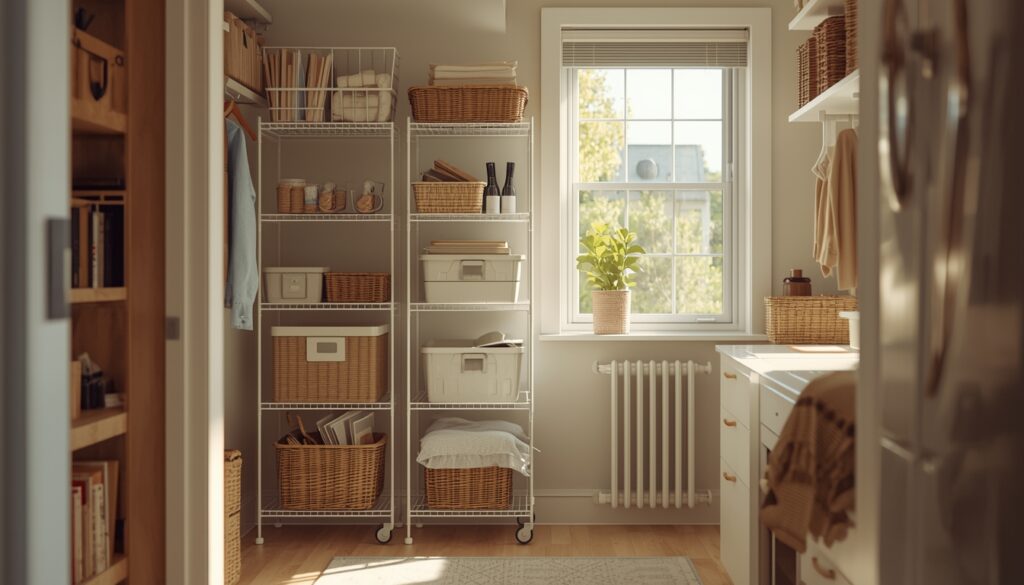
During busy weeks, I rely heavily on the hidden and vertical spaces we already own.
Under the bed becomes temporary storage for school bags or extra bedding that would otherwise clutter the floor. The top of the almirah holds less-used items in labeled bins. Over-the-door hooks or a tension rod in a corner can hold bags or light clothes without taking up floor space.
I keep a few versatile, easy-to-move containers ready — a large basket for quick pickup of scattered items, a tray for the dining table, and a small caddy in the kitchen for cleaning cloths and a sponge. These tools make the daily reset faster because everything has an obvious home.
Involving the Whole Family Without Adding Pressure
In shared homes, one person cannot keep everything tidy alone. I make systems that are obvious and easy for all ages. Clear labels on drawers and bins (in Urdu or English) help everyone know where things belong. Color-coded baskets for different family members reduce confusion.
I involve the family by assigning light, age-appropriate tasks. Younger children can put away their own shoes and toys. Older ones can help with the kitchen reset or folding mats. Even small contributions reduce the load on the main homemaker and teach responsibility.
During particularly busy weeks, I lower my expectations: “The house won’t be perfect this week, but let’s keep the entrance and kitchen counter clear so we can move easily.” This honesty prevents resentment and keeps everyone on the same page.
Common Pitfalls That Make Busy Weeks Harder
Trying to maintain a normal level of cleanliness during hectic periods often leads to burnout. Waiting until the weekend for a cleanup lets daily mess accumulate into something overwhelming. Not simplifying routines (meals, laundry, homework) adds unnecessary work.
Another frequent error is doing everything alone instead of delegating. Expecting the house to look perfect while everyone is tired creates unnecessary guilt and stress. Finally, ignoring rest — staying up late organizing instead of sleeping — makes everything feel harder the next day.
FAQ
How long should a daily reset realistically take during busy weeks?
10–15 minutes is usually enough. Focus on high-impact areas like the kitchen and entrance.
What if the whole family is too tired or busy?
Shorten it to 5 minutes, focused on critical zones. Even a minimal reset prevents major buildup.
How do I involve kids without turning it into a fight?
Make tasks simple and visual. Give them their own small basket or area. Celebrate small wins together.
Is it okay to let some areas stay messy during very busy weeks?
es. Prioritize pathways, kitchen counters, and the entrance. The rest can wait until energy returns.
What if we live in a very small flat?
The reset becomes even more important because the mess has nowhere to hide. Focus on vertical and hidden storage to keep surfaces clear.
Final Thoughts
Keeping your home organized during busy weeks isn’t about maintaining perfect order. It’s about creating gentle, repeatable habits and systems that prevent small messes from turning into big problems.
When you observe your real daily flow, reset key areas each evening, and involve the family with kindness, the house stops fighting you. Mornings feel lighter, evenings feel more relaxing, and you regain the energy that used to disappear into weekend cleaning sessions.
Start with just one or two micro-habits this week — perhaps the evening kitchen wipe and a clear entrance rule. Once you see how much calmer the space feels, the rest will follow naturally.
In the end, a home that stays mostly functional during busy weeks isn’t the result of rare heroic cleaning sessions. It comes from quiet, consistent attention to the little things. That small shift can turn even a hectic Pakistani home into a place that truly supports the life happening inside it, day after calm day.